From Distribution to Access FY25 Annual Report

Dear Foodbank Friends

Over the past year, our work has continued to evolve. For decades, food banking has been measured in pounds distributed. That measure still matters because food must move efficiently to meet rising demand. Yet as the needs of our region grow more complex, our responsibility has expanded beyond simply moving food. It now requires building systems that ensure consistent, reliable access to healthy meals across the communities we serve.

Access means more than volume. It means families can find food that supports their health, reflects their dignity, and fits their daily realities. It means reaching rural communities, seniors on fixed incomes, working parents balancing multiple jobs, and children who depend on consistent nutrition to learn and grow. It means building systems that respond when federal funding shifts, supply chains tighten, or crises disrupt normal routines.

Inside this report, you will see how that shift is taking shape.

Here, you will find how we are building systems that move fresh food quickly when narrow windows open, strengthening our ability to respond in real time. The stories and data reflect how we are redirecting surplus food into neighborhoods where it is needed most. You will also see how investments in technology and agency support are strengthening a network that distributes nearly three-quarters of the food that moves through our organization.

You will also meet the individuals who reflect these changes in tangible ways. Volunteers whose steady presence keeps operations moving. Partner agency leaders adapting to meet rising demand in their own communities. Seniors receiving consistent deliveries that offer both nourishment and connection. Students supported through programs designed to stabilize households beyond the school day. Across each story, a common theme emerges, one that centers on healthy food access as the foundation for stability.

This year brought sustained, high levels of distribution, though volume alone does not define progress. Growth required coordination across logistics, programs, partner agencies, volunteers, and donors. It required navigating shifts in federal resources and food costs. It required continued investment in infrastructure, including steady progress on our future campus in Virginia Beach, which will expand the capacity needed to serve neighbors for generations to come.

None of this happens in isolation. More than 7,000 volunteers gave their time. Partner agencies served nearly 1.9 million individuals. Donors and corporate partners invested in systems that make this work possible. This level of commitment continues to move the work forward across our service area.

As we look ahead, our focus remains clear. Distribution will always be essential, but healthy food access is the standard guiding our decisions and investments. The improvements in efficiency, the expansion of partnerships, and the stories shared here all reflect that continued shift in how we serve our region.

Thank you for being part of this work and for helping shape what comes next.

With heartfelt gratitude,

Read Less
Read More Christopher Tan -signature

Christopher Tan

President and Chief Executive Officer

Featured Image
  • stamp out hunger food drive
  • list of non perishable foods to donate

Strengthening Access for Our Neighbors

The Numbers Behind a Growing Need
A Network Built to Serve
Closing the Gap Between Surplus and Need
Strengthening Service Through Thoughtful Data
Moving Fresh Food Faster
Reaching Seniors Where Access Falls Short
Designed With Intention, Built on Belonging
Hunger Does Not Take A Break When School Doors Close
Operating Amid Federal Uncertainty
Barcode Scanners Boost Warehouse Efficiency
Across the Bridge, A Network That Connects
Creating Sustainable Solutions
A Summer Bridge Built Through Schools
Setting the Table for the Future at 3357 Dam Neck Road
Strengthening Food Access for Military Families
The Community Feed, In Practice and in Purpose
Behind-the-Scenes Conversations That Shape the Work Ahead
Annual Campaigns

In a region that spans 4,745 square miles of cities, towns, farmland, and coastline, the experience of hunger looks different from place to place. For some, it means a parent skipping meals so a child can eat. For others, it is an older adult stretching a fixed income that no longer covers groceries. Across Southeastern Virginia and the Eastern Shore, the numbers tell a clear story that the need is rising.

This year, 152,720 people in our service area are food insecure, up from 132,240 the year before. That is 1 in 8 neighbors unsure where their next meal will come from. In some localities, rates reach as high as 15.4 percent.

For children, the increase is even more stark. One in five children across our region are now food insecure, climbing from 49,880 to 51,970 in just one year. In rural Franklin, more than one in three children lack consistent access to food.

Behind each statistic is a set of pressures that have not eased. Food prices rose nearly 24 percent between 2020 and 2024. Pandemic-era supports expired. Housing, utilities, health care, and child care costs remain high. In 2023, households facing food insecurity needed an additional $22.62 per person per week just to meet basic food needs. For many families, that gap is the difference between stability and crisis.

Income alone does not determine who struggles. Job disruptions, medical bills, and unexpected expenses can quickly destabilize a household. Federal nutrition programs like SNAP are essential, yet an estimated 37.4 percent of people facing hunger in our region do not qualify. Among those who are eligible, 12 percent are not enrolled. Thousands fall into a space where earnings are too high to qualify for assistance but too low to keep pace with rising costs.

As need grows, the charitable food network has become an increasingly critical bridge. Through 226 partner agencies, mobile pantries, food hubs, and direct distributions, the Foodbank works to ensure food is accessible in both urban neighborhoods and rural communities. Last year alone, partner agencies distributed nearly three-quarters of the food that moved through our network and collectively served nearly 1.9 million individuals. Their role is central to meeting demand at the community level.

Feeding America’s Map the Meal Gap report confirms what we see each day in our warehouses, at mobile distributions, and in agency lines: more neighbors are seeking support, and many are doing so for the first time. Families who once managed on tight budgets are now navigating higher grocery bills and fewer safety nets. Seniors are choosing between prescriptions and produce. Working parents are stretching paychecks across rising essentials.

The trend is clear. Hunger is not confined to a single zip code, age group, or income bracket. It is shaped by a combination of economic pressures and limited access to affordable food. The response requires coordination across sectors, sustained investment in federal nutrition programs, and a strong charitable network that can adapt as conditions change.

For Southeastern Virginia and the Eastern Shore, 1 in 8 represents tens of thousands of neighbors whose well-being is tied to the strength of our community’s response.

Read Less
Read More

Meals do not move through a straight line. They begin with donations of food, funds, time, and advocacy from individuals, corporations, foundations, retailers, government, and community partners who believe access matters. From there, food moves into the Foodbank’s warehouse, where staff and more than 7,000 volunteers sort, inspect, and prepare items for distribution. That work creates the foundation, but it is only the beginning.

From the warehouse, food moves outward through hundreds of partner agencies that bring it into neighborhoods and households. Food pantries, soup kitchens, emergency shelters, and community organizations collaborate with the Foodbank to turn truckloads of product into meals.

These agencies are the places neighbors recognize and trust, and they are essential to making access real. Today, the network includes 226 active partner agencies, with 36 new agencies added in the past year alone. That growth reflects years of rebuilding after significant disruption. During the COVID-19 pandemic, the partner agency network was nearly cut in half. Many agencies were led by seniors for whom it was not safe to remain open. Others lost funding, fell out of compliance, or were forced to pause operations as volunteer bases disappeared. Rebuilding the network required renewed recruitment and oversight to ensure partners could operate safely and sustainably. The result is a stronger and more resilient system positioned to serve communities across the region.

Partner agencies make it possible to serve the region at a level the Foodbank could not reach alone. This year, agencies distributed more than 18 million pounds of food, nearly three-quarters of the Foodbank’s total distribution. Through their pantries, meal programs, and distributions, they served more than 1.9 million individuals. That work depends on constant coordination and accountability. Agencies complete an application process, participate in required training, and meet ongoing food safety and operational standards. Over the past year, the Foodbank conducted 108 inspections and site reviews to support compliance and strengthen operations. Partnership is an active commitment on both sides.

There is no single way food reaches a neighbor. Partner agencies operate through many models, including client choice pantries, federal nutrition programs, drive-through distributions, pre-boxed groceries, ready-to-eat meals, and prepared food service. Some sites are open daily, while others operate in the evenings or on weekends to reach working families. These choices are intentional. Partnership decisions look beyond geography alone and account for transportation, hours of operation, cultural relevance, and the ability to serve specific populations. The goal is not simply coverage on a map, but access that fits the realities of daily life.

For many agencies, food is only one part of the support they provide. Across the network, partners also offer clothing closets, baby items, recovery support through AA and Al-Anon, mental health services, domestic violence resources, financial assistance and literacy programs, health services, homeless services, veteran support, workforce development, and educational assistance. Food creates stability, and that stability allows agencies to address other needs that are often intertwined with hunger.

Partner agencies extend the Foodbank’s reach. They provide the volunteers, the staffing, the relationships, and the trust that allow meals to move quickly and with dignity into communities. They adapt to changing needs, adjust hours, and build programs around the realities their neighbors face. The partner agency network represents a system strengthened and ready, shaped by shared responsibility and sustained by the organizations that carry the work forward every day.

Read Less
Read More

Each year, 92 billion pounds of food are left uneaten in the United States, making excess food the single largest category of material in landfills. At the same time, families across our region continue to face barriers to consistent access to nutritious food. The Retail Rescue program exists in that gap.

Retail Rescue focuses on recovering surplus, safe-to-eat food before it becomes waste and redirecting it into communities. Through partnerships with food retailers, manufacturers, and farmers, food that would otherwise be discarded is put back to use. This year, those efforts kept more than 9.5 million pounds of food out of the waste stream locally, including nearly 4.3 million pounds of produce and protein.

While Retail Rescue starts at the store, its success depends on what happens next. Partner agencies play a central role in moving food quickly and responsibly to neighbors. That work is made possible through close coordination with the Foodbank, which supports agencies with guidance to keep food moving safely and efficiently.

Agency enablement is what makes that speed possible. This year, 23 new partner agencies joined the Retail Rescue network, bringing the total to 182. Of those agencies, the majority are enabled to pick up food directly from retail partners. Enablement means agencies are trained, approved, and prepared to manage retail pickups independently, meeting food safety requirements while maintaining consistent and reliable schedules with their store partners.

That model allows food to move straight from stores to pantry shelves, often within hours. It eliminates the interim stop at the Foodbank, reduces handling, and shortens the time food sits in storage. Food reaches neighbors sooner, in forms that closely resemble what is available on store shelves.

Behind the scenes, a dedicated Retail Rescue team supports every step of the process. The team works closely with stores and agencies to build strong relationships, coordinate logistics, and ensure all partners remain compliant with food safety and program requirements. That ongoing support is what allows the network to grow without sacrificing accountability or trust.

Retail Rescue is often measured in pounds saved, but its strength lies in the system behind those numbers. When agencies are supported, food moves faster, waste is reduced, and communities are better served.

Read Less
Read More

This year, the Foodbank completed one of the most significant operational shifts in recent memory: transitioning 80 partner agencies to Service Insights on MealConnect (SIMC), a centralized, paperless intake system designed to improve how neighbors access food and how communities are served.

The work was substantial. It required new technology, redesigned workflows, and extensive training. But the goal was simple. It was to make it easier for neighbors to receive food while strengthening the Foodbank’s ability to respond to need with precision and equity.

For neighbors, the difference is immediate. Instead of repeating paperwork at every pantry, intake is now universal. A neighbor checks in once, receives a key tag, and can be quickly scanned at participating agencies and program sites going forward. The process takes seconds, which allows lines to move faster and interactions to feel more human and less transactional.

Behind that speed is intention, with every question asked through SIMC being deliberate. The Foodbank collects only what it believes can be used to improve service and advocate for additional resources. Information such as household size, dietary needs, or participation in assistance programs helps identify gaps and direct food where it will have the greatest impact. None of it is used to deny service, and participation is always optional, with anonymous and opt-out choices built into the system at every step.

That clarity was essential, especially early on. When SIMC was first introduced, some partners and neighbors worried that data collection might feel intrusive and viewed it as an added burden rather than a benefit. Building trust required time and clear communication about the purpose behind the change. Data helps unlock funding, which expands access and allows the Foodbank to provide more appropriate food in the places it is needed most.

Internally, the rollout required close coordination across departments, led by the Data Intelligence and Partner Agency Services teams working alongside partner agencies. Each agency moved through a structured onboarding process designed to meet them where they were, beginning with individualized setup sessions to assess technology needs and tailor an onboarding plan. Teams were then trained, either in person or virtually, based on preference and capacity. During initial live distributions using SIMC, Foodbank staff were on site to support volunteers and troubleshoot in real time. After launch, ongoing check-ins helped ensure systems continued to operate smoothly.

The pace of adoption stood out compared to peer food banks, driven by hands-on support and a shared understanding that the work ultimately benefits the neighbors standing at the table.

SIMC reduces barriers for the neighbors that we serve and creates a clearer picture of need across the region. With real-time data, the Foodbank can advocate more effectively and plan services that better match who is being served. The transition required effort across the organization and partner network, resulting in a system that supports more responsive and equitable food assistance.

Read Less
Read More

The sharp increase in produce distribution this year was driven in large part by a shift in how the Foodbank responds to USDA food availability, through the creation of the TEFAP Fresh Push Plan.

TEFAP Fresh operates differently from traditional food sourcing. Much of the product offered through the program comes from excess harvests that US farmers need to move quickly to avoid spoilage. When these items become available, food banks are given a narrow window to claim and distribute them.

Over the past two years, the Foodbank began to see pressure on its traditional TEFAP purchasing power. USDA entitlement funding, which states allocate to food banks based on the number of neighbors served through TEFAP, declined at the same time food prices rose. Bonus USDA TEFAP products, which are provided at no cost to food banks, increasingly took the form of fresh produce rather than shelf-stable items. Rather than turning away product the system could not absorb, the Foodbank built a new model around rapid distribution.

The turning point came in July 2024, when more than 700 cases of peaches became available through USDA channels. Other food banks lacked the space or systems to store and move the product quickly. The Foodbank accepted the full load and focused on building a plan to push it out immediately through USDA TEFAP partner agencies and Foodbank programs.

Instead of waiting for agencies to place orders, staff began creating proactive allocation plans tied to existing delivery routes and pickup schedules. USDA TEFAP agencies were matched with quantities that reflected their size and capacity. In most cases, product moved from receipt to distribution in under ten days.

To expand that capacity, the Foodbank formally launched the TEFAP Fresh Push Plan, allowing agencies to participate specifically in fresh distributions even if they were not traditional TEFAP partners. High-volume agencies were approached first based on their ability to receive and distribute larger quantities and were trained and onboarded into the program.

Technology made the model sustainable. TEFAP distributions require intake documentation for every neighbor and historically slow down the agency intake process. With the rollout of Service Insights Meal Connect (SIMC) at USDA TEFAP agencies, staff and volunteers could scan a household’s card and keep distribution moving, eliminating paperwork bottlenecks without compromising compliance.

Almost immediately, the system was moving thousands of cases of produce with ease. In a single month, for instance, more than 2,400 cases of apples were distributed through agency partners without disruption.

Today, more than 50 agencies participate in TEFAP and TEFAP Fresh, with additional partners participating solely in fresh distributions. To ensure that fresh produce reaches neighbors across the service area, USDA-supported mobile pantries and Eastern Shore distributions are also part of the Push Plan.

Internal systems built to support TEFAP Fresh now support faster movement of large, time-sensitive volumes across multiple product categories throughout the warehouse. By aligning storage, technology, agency partnerships, and logistics, the Foodbank created a model that turns surplus into access and ensures USDA-grade food reaches neighbors before it goes to waste.

Read Less
Read More

For many seniors, hunger is not the result of food scarcity but of isolation. Across urban neighborhoods and rural counties alike, transportation loss, health limitations, and fixed incomes quietly turn everyday errands into barriers. Dashin’ with Compassion exists to meet seniors at their front doors, where those barriers begin.

Through this program, partner agencies deliver food directly to senior living facilities and to older adults who can no longer travel to pantries on their own. This year, those partners completed 24,719 deliveries to seniors. Even at that scale, the number reflects capacity, not demand. Each agency involved in this work reports that the need for home-delivered food continues to grow faster than existing routes can support.

At Burning Bush Worship Center in Norfolk, the need became clear when seniors lost access to nearby grocery stores altogether. With the closest store now miles away, many neighbors simply cannot get food on their own. What began as a plan to serve 50 seniors quickly expanded into weekly deliveries reaching hundreds of people living in senior complexes where leaving the building is no longer realistic. The agency plans food intentionally, checking each item before delivery and rotating menus to provide variety and nutrition for seniors living on fixed incomes.

In rural Sussex County, the Community Coalition of Sussex sees the same barriers amplified by distance. Seniors who once came through pantry lines began disappearing, not because they no longer needed help, but because driving 10 to 15 miles was no longer safe. To reach them, the agency’s delivery routes now stretch across county lines, covering as much as a 45-mile radius. These routes often uncover seniors who were never reflected in pantry counts at all, neighbors who were “missing” simply because they could not physically show up. These relationships often run both ways. One man in his late 60s, who no longer has a car, insists on giving $5 at each delivery. “This is what I have,” he says. “I want to help where I can.”

That same emphasis on dignity shapes how First Baptist Church South Hill approaches senior deliveries. The pantry works with seniors aging in place within apartment complexes across multiple cities, many of them veterans in their 70s, 80s, and 90s who raised families and worked full careers. Deliveries are designed to support independence, with distributions set up in community rooms where seniors can choose food they know how to prepare and want to eat. Smaller packages, fresh produce, and ready-to-eat items allow seniors to maintain control over their meals and their daily routines.

For other partners, the urgency lies in timing as much as access. At Manna Ministry of Tidewater, referrals for senior deliveries have increased sharply over the past year. Their work focuses on the critical window between running out of food and a medical or housing emergency. Weekly deliveries provide about 100 pounds of food, enough to support complete meals for two to three weeks and stabilize households that may not have eaten consistently for days. Volunteers are trained to slow down, knowing that a delivery often becomes a lengthy conversation. For seniors who are isolated, that moment of connection reinforces a simple but essential message that they have not been forgotten.

Similarly in Portsmouth, Mercy Drops Dream Center approaches senior deliveries as the starting point for broader care. Meeting food needs creates space to address other tangible challenges, from stability at home to access to additional resources. Deliveries are planned with intention so that food feels respectful and usable. Just as importantly, the model creates time for conversation. Neighbors are invited to share their stories and wisdom, reinforcing that their voices are still valued. By pairing nourishment with connection, Mercy Drops recognizes that hunger relief expands into emotional and relational care, where connection becomes as essential as the food itself.

Across all partners, the patterns are consistent. Seniors who once managed independently now stay home because driving is unsafe or physically impossible. Others live alone, with limited income and few social connections. When delivery is unavailable, food simply falls out of reach. Delivery also fills a gap that food alone cannot address—a moment of reassurance, or the only human connection someone has that week.

Those 24,719 deliveries reveal a larger truth about hunger later in life. Seniors now make up nearly a quarter of all individuals served by the Foodbank, and that share continues to rise. Dashin’ with Compassion is a necessary response to an aging population and the growing reality that access, not availability, is the defining challenge.

Read Less
Read More

On Wednesday mornings at the Foodbank’s Eastern Shore Branch, the warehouse runs a little differently. There are no active distributions and fewer trucks coming and going, making the environment a bit quieter and more predictable. At long tables, volunteers work carefully to fill produce bags one item at a time with potatoes, carrots, and onions that will stock the Market Street Pantry.

These hours are reserved for accessible group experiences, a growing volunteer model created to welcome individuals of all abilities into the Foodbank’s work in ways that are both structured and impactful. The program launched this year and now operates regularly at two Foodbank branches as part of a broader commitment to inclusion and community connection.

The initiative began in Norfolk through a partnership with Sentara Health and Families of Autism Coming Together (FACT). Through the FACT Gives Back program, individuals with autism volunteer alongside Sentara team members in the Foodbank’s warehouse, completing essential tasks such as sorting donations, packing BackPacks for children, and bagging fresh produce.

What began as a single volunteer opportunity soon developed into a recurring shift. Over time, parents and group leaders observed that repeated participation helped volunteers build confidence and feel connected to a larger purpose.

At the Eastern Shore Branch, the model took shape through collaboration with the local Community Services Board. Early volunteer visits were occasional, once or twice a year. As interest grew, the branch intentionally restructured its schedule. Every Wednesday morning is now reserved for accessible group experiences, with twice-monthly visits and flexibility to support more if requested.

The timing and setting matter. With fewer distractions and a consistent routine, volunteers can focus on their tasks at a comfortable pace. The work they complete is essential as it supports food distribution efforts and increases access to nutritious food for neighbors.

Across both locations, the goal is to create volunteer opportunities that reflect the dignity of the people doing the work and the neighbors receiving food. By designing spaces where everyone can participate meaningfully, the Foodbank is expanding not only who can volunteer, but how community shows up for one another.

Read Less
Read More

When school doors close for the summer, the need for food does not. For many families, the loss of school meals coincides with higher household expenses and fewer community resources, while food donations to the Foodbank traditionally slow. In response to this predictable but persistent gap, the Foodbank relaunched Hunger Heroes in summer 2025 with a with a more intentional structure focused on consistency.

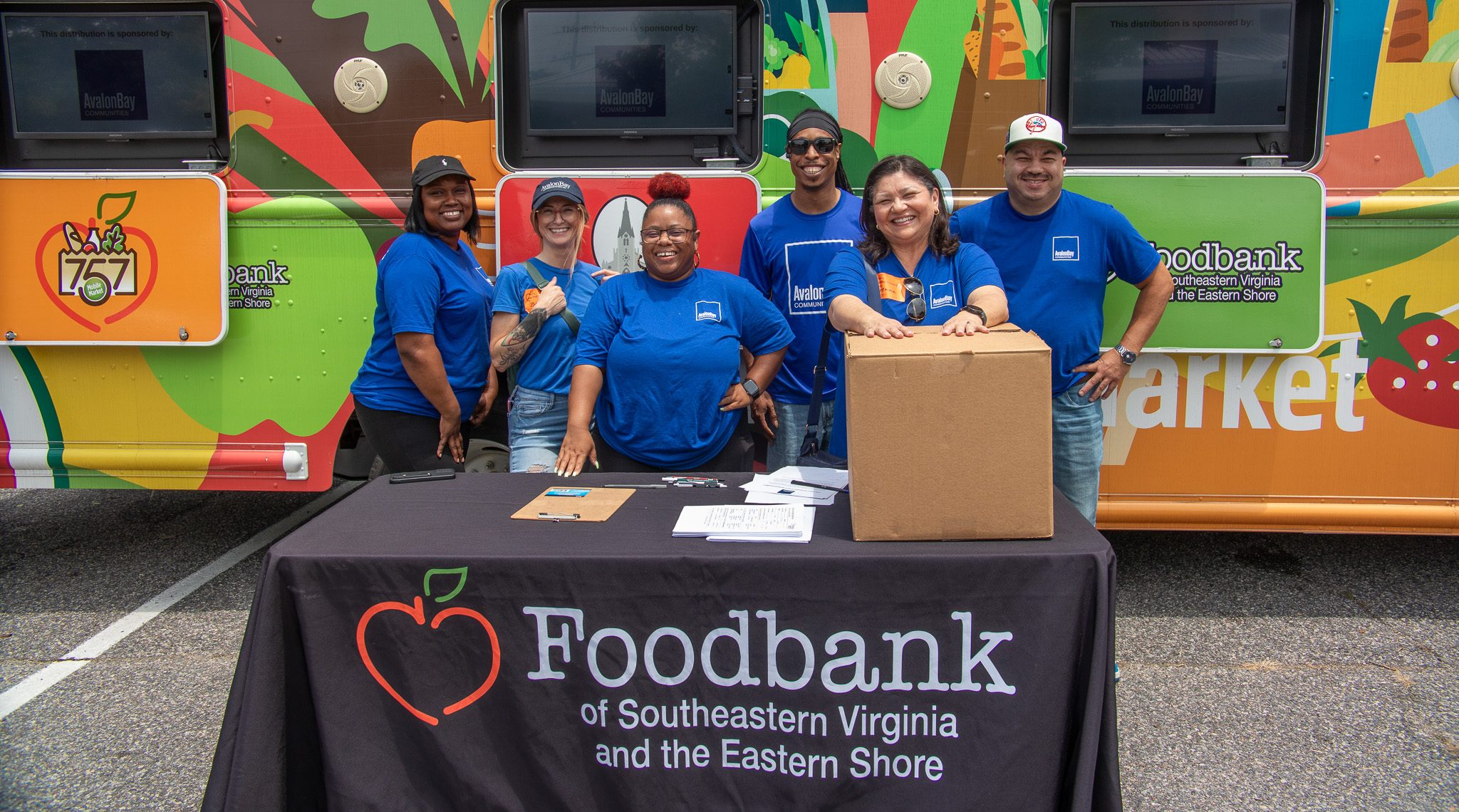
Hunger Heroes is built around the Foodbank’s 757 Mobile Market, a client-choice model that brings fresh, nutritious food directly into neighborhoods experiencing higher rates of food insecurity. At each distribution, families can select the items that best meet their needs, including seasonal produce, dairy, lean protein, and pantry staples. This approach supports household choice, reduces food waste, and mirrors the experience of shopping in a grocery store rather than receiving a pre-packed box.

The relaunched program was intentionally designed to be predictable for neighbors and partners alike. Distributions were scheduled at the same time and location each month from June through August, which allowed families to plan ahead and return regularly. During the pilot year, Hunger Heroes included 18 total distributions across multiple localities, with each two-hour event serving approximately 50 households.

Another defining feature of Hunger Heroes is its sponsorship model, with each distribution fully funded by a corporate or business partner. Sponsors are encouraged to volunteer at their distribution, which includes stocking the market, assisting neighbors as they shop, and seeing firsthand how their support translates into access to healthy food.

The 2025 Hunger Heroes season officially launched on May 10 with a kickoff distribution at Deep Creek Community Center in Chesapeake. That inaugural event was sponsored by Norfolk Academy as part of a student-led service-learning project, setting the tone for a summer centered on partnership and shared responsibility.

Throughout the summer, Hunger Heroes distributions were hosted at trusted community sites across the Foodbank’s service area, including Deep Creek Community Center; Mary D. Pretlow Library in Norfolk; Virginia Beach Parks & Recreation, in partnership with Rosemont Elementary and Williams Farm Park; Exmore Town Park on the Eastern Shore; and Morgan Memorial Library in Suffolk. These site partners opened their spaces month after month to ensure distributions were rooted in the neighborhoods they serve.

The relaunch of Hunger Heroes was made possible through the support of a broad group of corporate and business sponsors. The Foodbank extends its thanks to Norfolk Academy, Dollar Tree, Marathon Consulting, Michael & Son, Southern Bank, AvalonBay Communities, Nicholson AAAA Charitable Foundation, IES Electrical, Dollar Bank, Eastern Data, Virginia Natural Gas, and Titan America. Their collective support funded food, logistics, and staffing while reinforcing a shared commitment to addressing summer hunger locally.

By the end of the summer, Hunger Heroes had demonstrated the value of a consistent, neighborhood-based approach to seasonal hunger relief. Sponsors understood the direct impact of their investment, community partners saw reliable engagement rather than one-time events, and families knew when and where food would be available even when school doors were closed.

Read Less
Read More

This year, the Foodbank operated in a federal landscape that was far less stable than the one it had relied on in prior years. Programs that had become foundational to how food banks plan, purchase, and distribute nutritious food were scaled back, paused, or thrown into uncertainty, often with little warning and no clear replacement.

This was not a single cut or a single policy change but a year defined by overlapping disruptions that affected both the volume and quality of food moving through the charitable food system, as well as the Foodbank’s ability to plan ahead.

At the start of the fiscal year, federal nutrition programs were already under strain. Pandemic-era expansions had ended, food prices remained elevated, and demand at food pantries had not returned to pre-2020 levels. Against that backdrop, several federal supports that food banks had come to depend on began to shift.

One of the most immediate losses was the cancellation of continued funding through the Local Food Purchase Assistance (LFPA) program. LFPA had allowed food banks to purchase fresh food directly from local and regional farmers, which strengthened supply chains and increased access to produce and protein. For the Foodbank, it supported both nutrition goals and relationships with growers who had built planting and harvesting plans around those purchases. When the program was halted, that purchasing power disappeared, leaving a gap that could not be easily filled through traditional donation streams.

Soon after, changes to federal purchasing through The Emergency Food Assistance Program (TEFAP) added another layer of uncertainty. TEFAP has long been a cornerstone of the charitable food system, supplying large quantities of USDA-purchased food at a scale that private purchasing cannot replicate. Now, food banks across the country experienced delayed, reduced, or canceled orders. Locally, the Foodbank faced the loss of hundreds of thousands of dollars in expected product, much of it nutrient-dense food that is costly to replace.

At the same time, longer-term planning was disrupted by the anticipated loss of congressionally directed spending tied to facility design work. While not food dollars, these funds were connected to future capacity and efficiency, and their uncertainty forced difficult decisions about scope and sequencing of capital planning.

Taken together, these changes altered how the Foodbank operated day to day. Allocations to partner agencies had to be reassessed. Purchasing plans were rewritten as assumptions changed. Staff spent increasing amounts of time managing unpredictability rather than building forward momentum. The question was no longer how to grow responsibly, but how to absorb shocks without compromising nutrition or reliability.

By the end of the year, the cumulative effect was clear. The charitable food system had been asked to operate with less predictability and purchasing power, even as community need remained high. For the Foodbank, this meant navigating a year where stability could not be assumed and adaptability became a core operational requirement.

This period reshaped how the organization thought about the limits of the charitable food network. Federal programs had become integral to the Foodbank’s ability to provide consistent access to nutritious food at scale. When those supports shifted, the impact was immediate and deeply felt across the network of partners and neighbors the Foodbank serves.

This year stands as a reminder that hunger relief does not operate in isolation. It is tightly linked to national supply chains and policy choices that shape what food banks can reliably deliver. When those systems change, food banks must change with them, often in real time, and often with far-reaching consequences.

Read Less
Read More

For 44 years, our warehouse operations relied on pen and paper — a system prone to errors and inefficiencies. With handheld scanners and barcoding integrated through the Automated Data Collection System, our processes now operate with greater accuracy and efficiency. Many food banks across the country have already adopted similar systems, and now we are catching up to align our operations with industry best practices.

One of the first major upgrades was pallet movement tracking. Previously, staff manually recorded item numbers, pallet numbers, and bin codes before passing the information along for entry into the system. Now, barcode scanners allow pickers to update inventory instantly, eliminating paperwork and delays. This upgrade was only possible after transitioning from lot tracking, where entire shipments shared the same identifier, to pallet tracking, which assigns unique IDs to each pallet for more precise inventory management. While this shift took time, it laid the foundation for a more efficient system, thanks to the hard work of our Operations team.

Building on this foundation, the new system revolutionizes inventory management. Cycle counts and year-end inventory are now faster and more precise, and barcode scanning has replaced paper pick tickets to reduce errors. For example, when two similar cans of soup, such as low-sodium and regular, are stored side by side, the scanner verifies the exact item selected before it leaves the warehouse.

Originally expected to take five years, this transformation was nearly complete in just two and a half. After months of preparation and training, the barcoding process is fully operational, bringing our warehouse operations into the future and better equipping us to serve our community.

Read Less
Read More

Spanning 2,105 square miles, Virginia’s Eastern Shore is defined as much by distance as by community. The 17.6-mile Chesapeake Bay Bridge-Tunnel separates it from the rest of the Foodbank’s service area, and once across, Route 13 gives way to small hamlets, unpaved roads, and long stretches between services.

Within that landscape, the Foodbank’s Eastern Shore Branch operates as both hub and connector. In addition to supporting a network of partner agencies across the Shore, the branch directly runs two major distribution programs that have become anchors for the region: the Market Street Pantry and the Food Hub.

At Market Street, USDA distributions take place every Tuesday and Thursday. Managed by a small but steady team, the pantry has become a reliable source of food for thousands of neighbors. This year, it served more than 11,000 households, reaching 37,391 individuals and distributing 449,923 pounds of food.

By mid-morning on distribution days, the pattern is familiar. Cars line up as neighbors greet one another and volunteers move quickly but deliberately. Some people attend weekly, while others visit once a month. Many are older adults living on fixed incomes, and for some, this pantry serves as a primary source of food. On certain days, Retail Rescue items are added to the distribution, broadening what families can take home.

The consistency matters. In a rural region where transportation can be uncertain and distances are long, knowing food will be available at the same place and time each week reduces guesswork and allows neighbors to plan.

The Food Hub reflects a different approach. Open multiple times per month, it operates as a client choice pantry. Instead of receiving a pre-packed box, neighbors shop for their own groceries, selecting items that make sense for their lifestyles. Over the past year, the Hub served 4,167 households, reached 7,789 individuals, and distributed 173,983 pounds of food.

The space also brings other services into reach. Legal aid representatives set up tables to answer questions and assist with paperwork. The health department connects neighbors to public health resources. Telamon provides services and referrals for the Latino community. In a region where traveling from office to office can mean covering dozens of miles, having food and support in one location reduces barriers.

While these two programs are Foodbank-run, they are part of a broader network. Across the Shore, partner agencies operate pantries and mobile distributions in their own communities. This year, full participation in Service Insights on MealConnect, known as SIMC, connected them more closely than ever before

Every partner agency on the Eastern Shore is now using SIMC, and several mobile pantries are integrated as well, with more transitioning each month. The system streamlines intake. Once neighbors complete the process and receive a card, they can use it at any participating Foodbank program.

For many, that realization is significant. Neighbors often assume their access is tied to a single pantry. When staff explain that the same card works across locations, the response is often surprise followed by relief. In a region shaped by geography, flexibility expands access.

Rolling out SIMC required coordination. At Market Street, it took about four months for most neighbors to receive their cards. Mobile pantries transitioned in roughly two months, beginning with smaller sites before expanding outward. Partner agencies encouraged one another to adopt the system, sharing what they learned along the way.

At one Shore pantry, the volunteers most familiar with SIMC were scheduled to be away just as the site prepared to launch. Rather than delay, branch staff drove out to walk the team through the process step by step. What felt uncertain at first quickly became routine. By the end of the day, agency volunteers were navigating the system on their own.

There have been practical challenges, including spotty internet connections in rural areas. Even so, all partner agencies on the Shore are now participating, and mobile pantry integration is more than halfway complete.

On the Eastern Shore, distance is a constant factor. The response has been consistency at Market Street, choice and connection at the Food Hub, and coordination across a growing network of agencies through SIMC. Each reflects a branch that understands its geography and builds systems that work within it.

Read Less
Read More

In the ongoing battle against food insecurity, Value-Added Food Sales emerged to craft tailored solutions to meet the diverse needs of communities. At its core, Value-Added is a collaborative effort between service-driven organizations and non-profits sharing a common goal to end hunger. Rather than competing with retail giants, it seeks to offer an alternative avenue for grocery purchasing programs, ensuring that every dollar spent goes further in supporting those in need.

Central to this approach was the active involvement of our partner agencies. Through comprehensive surveys, we gathered invaluable insights, with 90% of agencies responding and influencing the selection offered products. From offering a mere handful of products last year to a roster of 90, Value-Added Food Sales is rapidly expanding its reach. Every agency now has access to this resource, with capacity to offer even more products in the future.

One of the primary objectives is to limit how many stops agencies have to make to source food. The Foodbank can supply fresh produce, dry product, and frozen items in one affordable and convenient spot. As grants supporting produce purchasing initiatives diminish, Value-Added becomes instrumental in ensuring the sustainability of our commitment to providing free produce to partner agencies.

Moreover, this initiative not only aids in cost-saving for agencies but also streamlines inventory management, minimizing the risk of lost products and ensuring quicker turnaround times. It’s a holistic approach towards sustainability, ensuring efficiency and effectiveness in every aspect of operations.

It’s crucial, however, to clarify that this doesn’t replace the importance of community donations. Rather, it complements them. By redirecting spending towards impactful initiatives, it empowers agencies to make a tangible difference while maximizing their budgets. It’s a strategic investment in the future, safeguarding access to nutritious food for vulnerable populations.

Read Less
Read More

For many families in Virginia Beach, schools remained a steady point of connection long after the last bell rang. That connection was especially important in a city where 14,620 children experienced food insecurity and the loss of school meals during the summer placed added pressure on household budgets.

During the summer, the Foodbank partnered with Virginia Beach City Public Schools and the Sodexo Stop Hunger Foundation to carry out a summer meal box program designed to extend access to nutritious food beyond the school year.

Meal boxes were delivered weekly to participating school sites, where administrators managed distribution directly to students. Each box included a generous portion of shelf-stable items that families could use to prepare complete meals at home. By anchoring distribution at schools, the program built on existing relationships and routines, allowing families to receive food in a familiar, trusted setting.

That approach helped reduce barriers at a time when schedules changed and many traditional supports were unavailable. School staff, already connected to students and caregivers, played a central role in ensuring food reached children consistently throughout the summer months.

The program reflected an ongoing collaboration between the Foodbank and the Sodexo Stop Hunger Foundation to address summer hunger locally. Working alongside Virginia Beach City Public Schools, the partnership demonstrated how coordinated, school-based efforts can help maintain continuity for students when school is out and the need for food remains.

Read Less
Read More

The Setting the Table capital campaign reflects the Foodbank’s commitment to expanding our reach across our service area. The construction of a more accessible and efficient campus will bring together more partner agencies and volunteers, strengthening our ability to fulfill our mission of eliminating hunger.

Progress is well underway. In December 2024, the Foodbank acquired property at 3357 Dam Neck Road for $2.8 million. The site’s history as farmland played a central role in that decision, and we are committed to honoring that history by returning the land to its original purpose of providing healthy food. In doing so, we aim to respect and preserve the legacy of its past while creating a welcoming and beautiful new space. Our vision for the facility includes thoughtful design and landscaping that ensures it complements the community, offering a space that is both functional and respectful of its surroundings.

Key milestones have already been reached. The rezoning request received unanimous approval from the Virginia Beach Planning Commission and City Council in summer 2025, and the campaign has also made strong financial progress. Of the $25 million campaign goal, 62 percent had been raised by the end of the year. This early momentum has positioned the project to move confidently into its next phase of hiring a construction management firm, completing architectural design plans, and preparing for a groundbreaking celebration. Throughout the process, the Foodbank will continue community engagement and provide regular updates to stakeholders.

Setting the Table reflects a collective commitment to long-term solutions. By investing in infrastructure today, the Foodbank is building the capacity needed to serve neighbors for generations to come.

Read Less
Read More

In March, the Foodbank launched Harvest for Heroes, a focused effort to address food insecurity among active-duty service members, veterans, and their families across Hampton Roads. The program was created in response to a clear need. Military households face frequent moves, childcare gaps, spouse employment disruption, and the rising cost of living. For some, those pressures translate into inconsistent access to food.

With grant support from Humana Military and USAA, Harvest for Heroes uses the 757 Mobile Market to bring fresh food directly into military housing communities, reducing transportation barriers, limiting stigma, and ensuring families can access groceries close to home.

Through a partnership with Liberty Military Housing, the program delivers food into neighborhoods surrounding Naval Air Station Joint Expeditionary Base Little Creek, Naval Station Norfolk, and Northwest Annex. Distributions take place five to six times each month in communities including Norfolk Pointe, Norfolk Crossing, Willoughby, Little Creek, and Northwest Annex housing.

The design of the program reflects what military families have said they need: access that feels routine, food that supports health, and an environment that respects privacy. The mobile format allows neighbors to select groceries in a way that mirrors a small market, reinforcing both choice and dignity.

Funding from Humana Military supported 16 distributions in early 2025, and a grant awarded through Feeding America, with support from USAA, funded an additional 17 distributions. This combined support established a consistent schedule of service, allowing families to plan around reliable access points.

By bringing Harvest for Heroes directly into military housing communities, the program expands reliable access to nutritious food for service members, veterans, and their families in the places they call home.

Read Less
Read More

When The Community Feed food hubs opened, the goal was to create more than a place for weekly food distribution. The vision centered on bringing resources together in one consistent, welcoming space where neighbors could access groceries while also connecting to services that strengthen long-term stability.

Across four food hubs this year, more than 1.2 million pounds of food were distributed through 568 distributions, reaching more than 70,000 individuals. Each week, families arrive for fresh produce, protein, and pantry staples. At the same time, they encounter partners who can help address the barriers that often sit behind food insecurity.

Hunger rarely exists in isolation. Gaps in healthcare coverage, housing instability, limited access to higher education, and financial strain often overlap. By embedding community partners directly into weekly distributions, the hubs reduce the need for families to navigate multiple systems on their own. Conversations that begin while waiting in line or packing groceries often lead to appointments, follow-ups, and referrals that extend well beyond that day’s visit.

New partners have expanded that reach. Civic Innovations provides information on legislative issues that affect local families. Gateway Services offers guidance related to housing and medical concerns. Oak Street Health assists neighbors with Medicaid and Medicare enrollment. The Virginia Department of Health has distributed free Covid testing kits and public health information. The UP Center shares financial literacy resources, and the Norfolk Community Services Board connects individuals to health insurance, housing assistance, medication access, and referrals to other agencies. Their presence reflects the core idea behind the hubs: food access paired with practical pathways toward stability.

Throughout the year, the hubs have also served as gathering places for special events that deepen that sense of community. A Sentara Health Fair brought licensed practical nurses and nurse practitioners on site to conduct A1C, blood pressure, BMI, and cholesterol screenings, alongside a mobile mammogram van. Over the summer, 100 children received school supplies at a Back-to-School Giveaway, with lunch donated by IHOP and Hardee’s. UVA Nursing School provided health screenings to 25 neighbors in in the fall. October’s Trunk-or-Treat welcomed more than 100 families. Shortly after, 91 neighbors were served a hot Thanksgiving meal prepared by Mercy Chefs. A Valentine’s Day banquet provided meals to 35 households along with gift baskets for children, and in the spring, 50 families gathered for a Mother’s Day luncheon where mothers received donated flower bouquets.

These moments reinforce that food hubs are designed to be consistent points of access and connection. The groceries matter. The screenings, enrollments, referrals, and conversations matter just as much. Community partners play a central role in making that possible, ensuring that when a neighbor comes to The Community Feed for food, they also leave with resources and relationships that support a more stable path forward.

Read Less
Read More

Each quarter, the Foodbank hosts a Behind-the-Scenes Breakfast with President and CEO to bring stakeholders into the work beyond the public-facing moments. These breakfasts are intentionally small and conversational. Guests gather early in the day to hear directly from leadership about what the Foodbank is seeing across the region, how operations are evolving, and where emerging challenges and opportunities are shaping decision-making. The setting allows for honest discussion that goes deeper than a presentation or formal briefing.

Participants receive updates on food sourcing, distribution trends, and system pressures, alongside context for long-term planning. Conversations often touch on topics such as shifts in federal food programs, changes in demand across partner agencies, infrastructure needs, and how community partnerships support stability during periods of uncertainty. Questions and dialogue are encouraged to reinforce the idea that hunger relief is a shared responsibility.

Just as important as the information exchanged is the connection built in the room. The breakfasts create space for people who support the Foodbank in different ways to hear one another’s perspectives and better understand how their roles intersect. Volunteers learn more about the logistics behind the work they support. Donors and vendors gain insight into operational realities. Elected officials and partners hear directly how policy, funding, and collaboration translate into impact on the ground.

By opening the door to these behind-the-scenes conversations, the Foodbank strengthens transparency and shared understanding. The breakfasts reflect a commitment to keeping the community informed and engaged as the organization continues to adapt and plan for the future together.

Read Less
Read More

19th Annual Statewide Legal Food Frenzy

The Legal Food Frenzy (LFF) is an annual fundraising competition forged through collaboration with the Virginia Attorney General, the Young Lawyers Division of the Virginia Bar Association, and the Federation of Virginia Food Banks. Participation in LFF extends to all members of the Virginia legal community. All funds raised by teams directly benefit the regional food bank serving their local community.

Total Funds $65,011
Total Pounds 2,711
Total Meals 132,284

Canstruction Hampton Roads

Canstruction is a unique charity art exhibition in which architectural, construction, and engineering teams compete to see who can best defy the laws of gravity by creating structures assembled from canned food. Once the structures have been judged, all food from the competition is donated to the Foodbank.

Total Funds $4,500
Total Pounds 21,800
Total Meals 27,167

FM99 and 106.9 The Fox 26th Annual Mayflower Marathon

In 1997, 106.9 The Fox initiated the Mayflower Marathon to support local food banks and address the pressing needs of our neighbors during the holiday season. The event’s impact grew even stronger in 2008 when The Fox’s sister station, FM99, joined forces to make the Marathon even more substantial. The stations boast an incredibly generous and community-minded listening audience, and by promoting the event on both platforms, they knew they could significantly increase the number of donations and illuminate the holidays with hope. This round-the-clock food and fund drive takes place on the weekend before Thanksgiving every year. Supporters are encouraged to drive through one of our two locations where volunteers are on hand to accept donations.

Total Funds $246,702
Total Pounds 190,808
Total Meals 652,413

NALC Stamp Out Hunger

The National Association of Letter Carriers Stamp Out Hunger Food Drive is an annual event that mobilizes communities across the nation to help combat hunger. Every second Saturday in May, letter carriers collect non-perishable food donations left by residents near their mailboxes. These generous contributions go directly to local food banks and pantries, supporting individuals and families struggling with hunger. This food comes at a crucial time as it helps address the heightened demand for food assistance during the summer months.

Total Funds $500
Total Pounds 37,129
Total Meals 31,941
Read Less
Read More
Previous Story
Next Story

Measuring Healthy Food Access

Distribution Totals

24,615,499

Total Pounds Distributed

20,512,916

Total Meals Distributed

7,947,204

Pounds of Fresh Produce Distributed

3,865,608

Pounds of Protein Distributed

2,300,996

Distribution Interactions

44%

Increase in Distribution Interactions

42

Average Distributions Per Day

Where Our Food Goes

18,776,720

Partner Agencies

2,364,433

Mobile Pantries

1,830,214

Misc. Programs

1,202,186

Food Hubs

441,945

Child Nutrition Programs

76.28% Partner Agencies

9.61% Mobile Pantries

7.44% Misc. Programs

4.88% Food Hubs

1.80% Child Nutrition Programs

74.86% Donated

12.09% Purchased

13.05% Government

Where Our Food Comes From

18,310,797

Donated

2,958,803

Purchased

3,191,652

Government

Produce Sources

7,840, 481

Donated

106,723

Purchased

$15,099,688

Value

52.62% Retail Rescue

21.33% Food Bank Network

6.96% Community at Large

19.09% Business and Commercial

Where Our Donated Food Comes From

9,635,149

Retail Rescue

3,905,551

Food Bank Network (Feeding America, Federation of Virginia Food Banks, Other Food Banks)

1,274,669

Community at Large

3,495,428

Business and Commercial

757 Mobile Market

The 757 Mobile Market is a mobile distribution that brings healthy food directly into high-need communities where access to affordable groceries can be limited. Designed to mirror a small market experience, neighbors are invited to step inside the truck and select fresh produce, dairy items, protein, and pantry staples at no cost.

281,054

Pounds Distributed

234,212

Meals Provided

10,445

Individuals Served *

BackPack Program

The nationally recognized BackPack Program is an initiative aimed at combating childhood hunger. Supported by Feeding America, the program provides nutritious, easy-to-prepare food to children who may not have access to adequate meals during weekends and school breaks. Through partnerships with local schools and community centers, participating students receive backpacks filled with nonperishable food items, such as canned fruits, protein-rich snacks, and whole-grain products.

61

Number of Schools

59,015

BackPacks Distributed

6

Average Meals Per Bag

11

City and County Participation

Campus-Based Pantries

Campus-based pantries ensure that students can focus on their education without the burden of hunger. These partnerships bring together the expertise and resources of the Foodbank with the localized understanding and proximity of campus pantries, creating a more efficient and targeted approach to address the unique challenges of college students struggling with food insecurity.

2

Number of Sites

84,744

Pounds Distributed

70,620

Meals Provided

30,890

Pounds of Produce and Protein Distributed

4,772

Individuals Served *

Commodity Supplemental Food Program (CSFP)

CSFP is a federal feeding program that works to improve the health of low-income persons at least 60 years of age by supplementing their diets with nutritious USDA foods. This program provides a 30-pounds box of nonperishable food plus nutrition education including health tips and recipes.

18

Number of Sites

207,660

Pounds Distributed

173,050

Meals Provided

6,001

Boxes Distributed

508

Individuals Served Monthly *

Eastern Shore Branch

The Foodbank’s Eastern Shore Branch, located at 24530 Coastal Boulevard in Tasley, was established in 1984 to enable better distribution of resources and services, ensuring that communities across the entire region receive vital support to alleviate food insecurity.

37

Distribution Points

1,737,865

Pounds Distributed

1,448,221

Meals Provided

930,170

Pounds of Produce and Protein Distributed

634,533

On-Site Branch Total Pounds Distributed

137,552

Individuals Served *

43,429

On-Site Branch Individuals Served *

Food Hubs

Food hubs represent a transformative approach to tackling food insecurity by not only providing essential nourishment but also addressing the underlying root causes that perpetuate hunger like lack of access to higher education, employment, housing, healthcare, and financial literacy. This integrated approach seeks to break the cycle of food insecurity by empowering individuals to improve their circumstances and build a more sustainable future for themselves and their families.

4

Number of Sites

1,202,186

Pounds Distributed

1,001,822

Meals Provided

575,987

Pounds of Produce and Protein Distributed

70,264

Individuals Served *

568

Total Distributions

623

Sentara Referrals

Izzie's Field

This Farm to Foodbank project – funded by Kroger and supported by New Life Church, Pop Son Farm, and Hubbard Peanut Company – aims to increase the availability of fresh produce to our community while also supporting the hard working and generous spirit of a local grower. The harvested produce is distributed to various partner agencies and food hubs across the region.

7,338

Pounds Distributed

Sweet Corn & Single Origin Redskin Peanuts

Crops

Mobile Pantry

The mobile pantry program brings free groceries directly to underserved areas and food deserts on a recurring basis, providing a dependable source of nutritious food for those in need. This program utilizes trucks stocked with an assortment of fresh produce, nutritious staples, and essential food items.

32

Number of Sites

2,364,433

Pounds Distributed

1,970,361

Meals Provided

1,654,421

Pounds of Produce and Protein Distributed

108,428

Individuals Served *

321

Total Distributions

Nourishing Our Neighbors

Nourishing Our Neighbors ensures that children have access to nutritious that is essential for their growth and well-being, accompanied by valuable nutrition education resources. This initiative focuses on supporting families with children in communities facing higher levels of food insecurity, where more than 15% of households struggle to access adequate food and where 50% or more of students qualify for free and reduced-price meals at school.

28

Number of Sites

266,212

Pounds Distributed

221,843

Meals Provided

244,048

Pounds of Produce and Protein Distributed

36,838

Individuals Served *

Partner Agencies

Partner agencies are community organizations – food pantries, soup kitchens, emergency shelters, etc. – that collaborate with the Foodbank to help distribute food to individuals and families in need.

226

Active Partner Agencies

36

New Partner Agencies

18,776,720

Pounds Distributed

15,647,267

Meals Provided

7,921,183

Pounds of Produce and Protein Distributed

1,940,138

Individuals Served *

21.6%

Increase in Individuals Served

113

Additional Services Provided

108

Inspections and Site Reviews

88

Client Choice Distributions

60

Drive-Thru Distributions

24,240

Senior Deliveries

Retail Rescue

Retail Rescue is an initiative dedicated to minimizing food waste and combating hunger. Through strategic partnerships with various food retailers, manufacturers, and farmers, the program rescues surplus, safe-to-eat food that would otherwise go to waste and redirects it to the Foodbank and local partner agencies.

182

Number of Retail Partners

23

Agencies Onboarded

9,529,359

Pounds Distributed

7,941,133

Meals Provided

4,279,722

Pounds of Produce and Protein Distributed

Supplemental Nutrition Assistance Program (SNAP)

SNAP serves as the first line of defense against hunger. Formerly called Food Stamps, SNAP can be used like cash to buy eligible food items from authorized retailers. Authorized retailers will display either the Quest logo or a picture of a Virginia EBT card.

$7,441,773

Local Economic Impact

$4,832,320

Total SNAP Benefits

1,190,227

Meals Attributed to Outreach

1,088

Applications Enabled

65%

Approval Rate

$418.58

Average Monthly Benefit

16.3 months

Average Certification Period

$4.06

Average Cost of Retail Meal

The Emergency Food Assistance Program (TEFAP)

TEFAP is a federal feeding program for low-income individuals and families of all ages who reside in Virginia. This program helps farmers and manufacturers across the country minimize food waste and utilize these foods to feed those in need. This program provides a variety of items depending on what is available including nonperishable fruit, vegetables, beans, pasta, and juice as well as frozen or canned meats, dairy products, and fresh produce.

84

Number of Sites

16

New Agencies

3,157,644

Pounds Distributed

2,631,370

Meals Provided

1,007,761

Pounds of Produce and Protein Distributed

Volunteers

Volunteers are essential to our daily operations, helping with everything from sorting and packing food to managing distribution events, providing administrative support, engaging in community outreach, and more.

7,317

Total Volunteers

60,022

Volunteer Hours

5,474

New Accounts Created

7.5

Increase in Volunteers

$2,088,165

Monetary Value of Hours

29

Full-Time Employee Equivalent

Western Tidewater Branch

The Foodbank’s Western Tidewater Branch, located at 618 South Street in Franklin, was established to provide enhanced services to the region and target families facing food insecurity in these rural communities. The nearly 17,000-square-foot building houses a fully equipped warehouse featuring walk-in refrigerators and freezers, and dry storage capacity that can accommodate up to 96,000 pounds of dry, shelf-stable foods. The facility also has numerous classrooms and meeting spaces, plus a computer lab to support programs designed to address the root causes of food insecurity.

59

Distribution Points

3,380,641

Pounds Distributed

2,817,201

Meals Provided

1,765,492

Pounds of Produce and Protein Distributed

427,830

On-Site Food Hub Pounds

203,498

Individuals Served *

Please note that individual data may be duplicated *

Advancing Access with Our Neighbors

Ageless in Service

On Tuesdays and Thursdays at the Western Tidewater Branch, two volunteers often work the same floor from opposite ends of life. One is 93, and the other is 13. Despite the difference in years, they show up for the same reason.

Pat Haley has been volunteering at the branch since its early days, and at 93, she still arrives ready to help however she can. That might mean carrying out groceries, wiping up a spill, or greeting neighbors as they arrive. If something needs attention, Pat steps in where she’s able.

“You have to have something to do,” Pat said simply. “I’m retired. What do I do? I like people.”

For Pat, volunteering has always been about giving beyond yourself, a practice shaped over decades and reinforced through family. She raised her children with the expectation that if someone needs help and you are able, you help. That same mindset guides how she approaches her time at the Foodbank. She doesn’t see herself as the source of what neighbors receive, just one part of a much larger effort that keeps things moving.

“I’m only the conveyor,” she said. “If it wasn’t for everybody, we wouldn’t have it.”

A few aisles away, Natalie Hinson brings that same spirit to the work, even though she is still in middle school. Natalie is in eighth grade and has been volunteering since she was 10. Every Thursday, her grandmother picks her up from school and drives her straight to the marketplace, a routine they both enjoy and have come to value together.

Natalie first got involved because she and a friend needed service hours for school. She stayed because she liked it. Now, she volunteers without needing the hours at all.

“I do it for fun,” she said. “And to help people.”

One of Natalie’s favorite tasks is putting together welcome boxes for neighbors visiting the pantry for the first time. Because first-time visitors can’t always shop right away, the boxes make sure they leave with something in hand. She enjoys creating them, but she’s just as happy running carts or jumping in wherever help is needed, always focused on making people feel comfortable enough to return.

“I haven’t met a single person I don’t like,” she said. “People are nice. They think about other people, too. They’ll save options for someone else if they already have enough at home.”

Pat has noticed that same kindness throughout her years of volunteering. She talks about neighbors who consistently say thank you, volunteers who are eager to learn, and familiar faces she doesn’t always know by name but is always glad to see again. Over time, the Foodbank has come to feel like a big family, made up of people who may never know each other’s full stories but show up anyway.

“You don’t know what’s behind people,” she said. “You can’t judge. You just have to give.”

For both Pat and Natalie, the work is about connection as much as food. Natalie says that when she doesn’t see regular neighbors for a while, she finds herself wondering how they’re doing. She notices people shopping for neighbors who can’t make it themselves and the transportation barriers that often sit alongside hunger. More than anything, she wants everyone who walks through the doors to feel important.

Pat understands that connection too, even as she navigates the limits that come with age. She no longer lifts heavy cases and sometimes has to ask others to handle tasks she once did herself. Letting go of that independence can be difficult, but it hasn’t stopped her from showing up and doing what she can.

“You do what you can,” she said. “You never know.”

Natalie sees service as shaping who you are in a similar way. Helping people, she says, is both fun and important. Over time, it changes how you see the world and the people in it.

If she had to describe her experience volunteering in one word, Natalie chose “pleasant.”

Pat comes back to the same idea in her own way. If more people would come in, she says, and do whatever needs to be done without looking down on others, the work would take care of itself.

At 93 and 13, Pat and Natalie stand as proof that volunteering doesn’t belong to a single generation. It belongs to anyone willing to show up, think of someone besides themselves, and help where they can.

Read Less
Read More

A Full-Circle Commitment to Students

Velverlee Parrish remembers the question clearly. A father stood in front of her, hesitant but honest, and said, “Yes, I can use all the help I can get.” It was a simple sentence, but it captured why the BackPack Program mattered and why she had pushed so hard to bring it to Waters Middle School.

For Velverlee, supporting students has always meant looking beyond what happens during the school day. In her role working closely with families and parents, she focused on helping households find the resources that allow students to succeed both academically and at home. She coordinated parent workshops tied directly to classroom learning, with the goal of bringing families into the educational process and reinforcing lessons outside of school hours.

That same focus on the whole student shaped her involvement with the BackPack Program.

As she worked alongside counselors and teachers, Velverlee noticed a pattern. Students who received weekend food support in elementary school often lost access once they transitioned to middle school. Hunger did not disappear just because a student moved up a grade, and she fought for the support to follow them.

Velverlee made the case directly to bring the program to Waters. During open house night, she took the opportunity to listen. She asked parents whether their children had participated in the BackPack Program before and whether they wanted it to continue. Many parents had questions. Did they need to show income? Was there a cost? Velverlee made it clear the program focused on access and interest rather than paperwork. The response made it clear the need was there.

The program began with 25 students and eventually grew to 35, limited only by available space. Each week, food went home and was used. Velverlee saw students making peanut butter and jelly sandwiches, helping prepare spaghetti or soup, and sharing meals with their families. Parents expressed gratitude and often described the program essential to to putting food on the table. The impact showed up in the classroom, too. When students had food, they were more engaged and better able to learn.

Discretion and dignity were central to how the program operated. Food deliveries arrived quietly on Tuesday mornings and were carefully coordinated among staff. On Fridays, students were called down based on their schedules. BackPacks were placed inside black bags so students could slip them into their own bookbags without drawing attention.

For Velverlee, the work carried personal meaning. Earlier in her career at The Virginian-Pilot, she had volunteered at the Foodbank, packing BackPacks for children she had never met. Years later, she found herself advocating for that same program on behalf of students in her own school community. The connection felt full circle.

Velverlee ran the BackPack Program at Waters for five years, beginning when schools returned after the COVID-19 pandemic. Even after she moved on, the program continues, supported by the systems and partnerships she helped put in place.

She continues to talk about the Foodbank wherever she can, at school and at church, encouraging others to donate and get involved. She believes food insecurity shows up in many ways, from acting out in class to falling asleep at a desk, and that seeing the Foodbank’s work behind the scenes would change how people understand hunger in their own community.

When asked to describe the impact, she doesn’t overstate it. “It’s definitely a helpful resource for families in need that may need a little assistance for a weekend meal,” she says. For the families she served, that assistance often made all the difference.

Read Less
Read More
when is volunteer appreciation week

A Bright Light in the Berkley Community

With nearly 600 volunteer hours at The Community Feed at Berkley, Carolyn Morris has become a reassuring presence for neighbors here. Her impact is rooted in consistency. She shows up, pays attention, and treats every person who walks through the door with care.

Carolyn began volunteering as she prepared to retire and found herself looking for a meaningful way to stay engaged. She first learned about the opportunity through her church, during conversations about opening a food hub in Berkley. Because she is from the area, the work felt personal. Giving her time there made sense, and it quickly became part of her routine.

On most days, Carolyn stocks shelves, straightens the space, and steps in wherever help is needed. She greets guests as they arrive, answers questions, and offers support to anyone who needs help navigating the pantry or carrying items. Just as important, she takes time to talk. Those conversations often help guests feel more at ease in a space that can feel overwhelming at first.

The food hub itself is small, which means flow and structure matter. Carolyn often helps manage the entry by standing at the door and letting a few guests in at a time, checking in with other volunteers before welcoming more. Some guests are surprised by how much is available and need a moment to take it all in. Carolyn responds by slowing things down just enough, pointing out items on the shelves, asking gentle questions, and helping guests think through what they might need. In doing so, she keeps the line moving while still honoring each person’s pace. She also makes a point to thank those waiting outside for their patience, something most guests respond to with understanding.

What keeps Carolyn coming back is the rhythm of it all. Volunteering a couple of hours a week feels manageable, and the time is well spent. She enjoys seeing former classmates and longtime neighbors, reconnecting through small moments and familiar faces. Over time, those connections have deepened. Guests notice when she is not there and ask about her, a reminder of how much presence matters.

Through her time at the food hub, Carolyn has gained insight into what neighbors prioritize when food is limited. Milk, eggs, meat, and vegetables are often first. Many guests note that they are looking for meals that are quick and easy to prepare. Carolyn helps by suggesting simple combinations using what is available, whether that means pairing pasta with sauce and ground meat or offering ideas for vegetables someone has never cooked before. More than once, guests have returned later to say the suggestions worked.

The most rewarding part of volunteering, Carolyn says, is seeing the relief and smiles on guests’ faces. Some arrive unsure of what they will find, or with little food left at home. Knowing they can leave with what they need reinforces why she is there. She also takes care to welcome those who hesitate at the door, helping break the ice so no one feels embarrassed or out of place.

Volunteering has also shaped how Carolyn views food insecurity in her community. She is quick to point out how easily circumstances can change and how close many people are to needing help themselves. That understanding guides how she treats every guest, with empathy and patience. She encourages others to pay attention to what is happening around them, to volunteer or give when they can, and to remember that even small gestures matter. One guest, she shares, comes by simply for a hug, a reminder of how important human connection can be.

Asked to describe the experience in her own words, Carolyn puts it simply: “It’s great, it’s endurable, and it’s putting a smile on somebody else’s face.”

For Carolyn, serving through the Foodbank means helping someone through a difficult moment, supporting families as they put food on the table, and making life a little easier for someone else. Week after week, that commitment makes her a bright light in the Berkley community.

Read Less
Read More

Brandy Bailey Found Her Place By Helping Others Find Theirs

When Brandy Bailey joined the Foodbank’s Western Tidewater Branch through an internship with Camp Community College, she was looking for a way to contribute locally. She wanted to be a friendly face and give back to the community she had recently moved to. What she found was an experience that shaped her understanding of food insecurity, strengthened day-to-day operations at the branch, and rooted her in Franklin in a lasting way.

For 18 months, Brandy supported nearly every part of branch operations. Her days included answering phones, scheduling appointments, stocking food, and helping resolve small issues as they came up. The work required flexibility and patience, and it gave her a clear view of how much coordination happens behind the scenes to keep food moving efficiently and neighbors supported with dignity.

That perspective became especially important during the branch’s transition to Service Insights Meal Connect (SIMC). Brandy played a hands-on role during a critical period of change. She helped brainstorm ways to make the new system easier for staff, volunteers, and neighbors to use, and assisted with temporary tools while the platform was being refined. She created spreadsheets to manage appointments and shared ideas to improve workflow and reduce friction at check-in.

The impact of that transition was immediate. Under the previous system, it could take several minutes to process each neighbor. With SIMC, that time dropped to under a minute. The shift allowed the branch to serve more people each day and made training new staff and volunteers simpler and more consistent. Brandy saw how small operational improvements could significantly expand access to food.

Her role also extended beyond systems and logistics. Brandy worked directly with neighbors, helping new families sign up for services, answering questions, and spreading awareness that a food bank was available in the Franklin area. She paid attention to practical barriers, including transportation, sometimes helping neighbors arrange rides home so they could take more food with them.

Through that work, Brandy gained a clearer understanding of food insecurity in the local community. She saw how many people relied on consistent support and how regular access to food affected their daily lives. Some of the most impactful moments came from seeing familiar faces week after week, noticing smiles when favorite items were available, and hearing neighbors thank volunteers and staff. Over time, she observed a close-knit community form—one built on trust routine.

When her internship ended, Brandy stayed. Volunteering felt natural, not like a step away from her role but a continuation of it. The branch had become a place where she felt service became community. Volunteers and staff felt like family, which was especially important as she built her life in a new town.

The experience also helped clarify her future. Working with the Foodbank confirmed her interest in a career focused on helping people and reinforced her comfort in customer-facing roles. It also deepened her awareness of social issues that many of her peers had not yet encountered firsthand.

Asked what she would tell future interns, Brandy keeps it simple: do not stress. The work is busy, sometimes chaotic, but rewarding. In her words, it was “the best first job I think anybody could imagine having.”

Read Less
Read More

On Tuesdays and Thursdays at the Western Tidewater Branch, two volunteers often work the same floor from opposite ends of life. One is 93, and the other is 13. Despite the difference in years, they show up for the same reason.

Pat Haley has been volunteering at the branch since its early days, and at 93, she still arrives ready to help however she can. That might mean carrying out groceries, wiping up a spill, or greeting neighbors as they arrive. If something needs attention, Pat steps in where she’s able.

“You have to have something to do,” Pat said simply. “I’m retired. What do I do? I like people.”

For Pat, volunteering has always been about giving beyond yourself, a practice shaped over decades and reinforced through family. She raised her children with the expectation that if someone needs help and you are able, you help. That same mindset guides how she approaches her time at the Foodbank. She doesn’t see herself as the source of what neighbors receive, just one part of a much larger effort that keeps things moving.

“I’m only the conveyor,” she said. “If it wasn’t for everybody, we wouldn’t have it.”

A few aisles away, Natalie Hinson brings that same spirit to the work, even though she is still in middle school. Natalie is in eighth grade and has been volunteering since she was 10. Every Thursday, her grandmother picks her up from school and drives her straight to the marketplace, a routine they both enjoy and have come to value together.

Natalie first got involved because she and a friend needed service hours for school. She stayed because she liked it. Now, she volunteers without needing the hours at all.

“I do it for fun,” she said. “And to help people.”

One of Natalie’s favorite tasks is putting together welcome boxes for neighbors visiting the pantry for the first time. Because first-time visitors can’t always shop right away, the boxes make sure they leave with something in hand. She enjoys creating them, but she’s just as happy running carts or jumping in wherever help is needed, always focused on making people feel comfortable enough to return.

“I haven’t met a single person I don’t like,” she said. “People are nice. They think about other people, too. They’ll save options for someone else if they already have enough at home.”

Pat has noticed that same kindness throughout her years of volunteering. She talks about neighbors who consistently say thank you, volunteers who are eager to learn, and familiar faces she doesn’t always know by name but is always glad to see again. Over time, the Foodbank has come to feel like a big family, made up of people who may never know each other’s full stories but show up anyway.

“You don’t know what’s behind people,” she said. “You can’t judge. You just have to give.”

For both Pat and Natalie, the work is about connection as much as food. Natalie says that when she doesn’t see regular neighbors for a while, she finds herself wondering how they’re doing. She notices people shopping for neighbors who can’t make it themselves and the transportation barriers that often sit alongside hunger. More than anything, she wants everyone who walks through the doors to feel important.

Pat understands that connection too, even as she navigates the limits that come with age. She no longer lifts heavy cases and sometimes has to ask others to handle tasks she once did herself. Letting go of that independence can be difficult, but it hasn’t stopped her from showing up and doing what she can.

“You do what you can,” she said. “You never know.”

Natalie sees service as shaping who you are in a similar way. Helping people, she says, is both fun and important. Over time, it changes how you see the world and the people in it.

If she had to describe her experience volunteering in one word, Natalie chose “pleasant.”

Pat comes back to the same idea in her own way. If more people would come in, she says, and do whatever needs to be done without looking down on others, the work would take care of itself.

At 93 and 13, Pat and Natalie stand as proof that volunteering doesn’t belong to a single generation. It belongs to anyone willing to show up, think of someone besides themselves, and help where they can.

Read Less
Read More

Velverlee Parrish remembers the question clearly. A father stood in front of her, hesitant but honest, and said, “Yes, I can use all the help I can get.” It was a simple sentence, but it captured why the BackPack Program mattered and why she had pushed so hard to bring it to Waters Middle School.

For Velverlee, supporting students has always meant looking beyond what happens during the school day. In her role working closely with families and parents, she focused on helping households find the resources that allow students to succeed both academically and at home. She coordinated parent workshops tied directly to classroom learning, with the goal of bringing families into the educational process and reinforcing lessons outside of school hours.

That same focus on the whole student shaped her involvement with the BackPack Program.

As she worked alongside counselors and teachers, Velverlee noticed a pattern. Students who received weekend food support in elementary school often lost access once they transitioned to middle school. Hunger did not disappear just because a student moved up a grade, and she fought for the support to follow them.

Velverlee made the case directly to bring the program to Waters. During open house night, she took the opportunity to listen. She asked parents whether their children had participated in the BackPack Program before and whether they wanted it to continue. Many parents had questions. Did they need to show income? Was there a cost? Velverlee made it clear the program focused on access and interest rather than paperwork. The response made it clear the need was there.

The program began with 25 students and eventually grew to 35, limited only by available space. Each week, food went home and was used. Velverlee saw students making peanut butter and jelly sandwiches, helping prepare spaghetti or soup, and sharing meals with their families. Parents expressed gratitude and often described the program essential to to putting food on the table. The impact showed up in the classroom, too. When students had food, they were more engaged and better able to learn.

Discretion and dignity were central to how the program operated. Food deliveries arrived quietly on Tuesday mornings and were carefully coordinated among staff. On Fridays, students were called down based on their schedules. BackPacks were placed inside black bags so students could slip them into their own bookbags without drawing attention.

For Velverlee, the work carried personal meaning. Earlier in her career at The Virginian-Pilot, she had volunteered at the Foodbank, packing BackPacks for children she had never met. Years later, she found herself advocating for that same program on behalf of students in her own school community. The connection felt full circle.

Velverlee ran the BackPack Program at Waters for five years, beginning when schools returned after the COVID-19 pandemic. Even after she moved on, the program continues, supported by the systems and partnerships she helped put in place.

She continues to talk about the Foodbank wherever she can, at school and at church, encouraging others to donate and get involved. She believes food insecurity shows up in many ways, from acting out in class to falling asleep at a desk, and that seeing the Foodbank’s work behind the scenes would change how people understand hunger in their own community.

When asked to describe the impact, she doesn’t overstate it. “It’s definitely a helpful resource for families in need that may need a little assistance for a weekend meal,” she says. For the families she served, that assistance often made all the difference.

Read Less
Read More

With nearly 600 volunteer hours at The Community Feed at Berkley, Carolyn Morris has become a reassuring presence for neighbors here. Her impact is rooted in consistency. She shows up, pays attention, and treats every person who walks through the door with care.

Carolyn began volunteering as she prepared to retire and found herself looking for a meaningful way to stay engaged. She first learned about the opportunity through her church, during conversations about opening a food hub in Berkley. Because she is from the area, the work felt personal. Giving her time there made sense, and it quickly became part of her routine.

On most days, Carolyn stocks shelves, straightens the space, and steps in wherever help is needed. She greets guests as they arrive, answers questions, and offers support to anyone who needs help navigating the pantry or carrying items. Just as important, she takes time to talk. Those conversations often help guests feel more at ease in a space that can feel overwhelming at first.

The food hub itself is small, which means flow and structure matter. Carolyn often helps manage the entry by standing at the door and letting a few guests in at a time, checking in with other volunteers before welcoming more. Some guests are surprised by how much is available and need a moment to take it all in. Carolyn responds by slowing things down just enough, pointing out items on the shelves, asking gentle questions, and helping guests think through what they might need. In doing so, she keeps the line moving while still honoring each person’s pace. She also makes a point to thank those waiting outside for their patience, something most guests respond to with understanding.

What keeps Carolyn coming back is the rhythm of it all. Volunteering a couple of hours a week feels manageable, and the time is well spent. She enjoys seeing former classmates and longtime neighbors, reconnecting through small moments and familiar faces. Over time, those connections have deepened. Guests notice when she is not there and ask about her, a reminder of how much presence matters.

Through her time at the food hub, Carolyn has gained insight into what neighbors prioritize when food is limited. Milk, eggs, meat, and vegetables are often first. Many guests note that they are looking for meals that are quick and easy to prepare. Carolyn helps by suggesting simple combinations using what is available, whether that means pairing pasta with sauce and ground meat or offering ideas for vegetables someone has never cooked before. More than once, guests have returned later to say the suggestions worked.

The most rewarding part of volunteering, Carolyn says, is seeing the relief and smiles on guests’ faces. Some arrive unsure of what they will find, or with little food left at home. Knowing they can leave with what they need reinforces why she is there. She also takes care to welcome those who hesitate at the door, helping break the ice so no one feels embarrassed or out of place.

Volunteering has also shaped how Carolyn views food insecurity in her community. She is quick to point out how easily circumstances can change and how close many people are to needing help themselves. That understanding guides how she treats every guest, with empathy and patience. She encourages others to pay attention to what is happening around them, to volunteer or give when they can, and to remember that even small gestures matter. One guest, she shares, comes by simply for a hug, a reminder of how important human connection can be.

Asked to describe the experience in her own words, Carolyn puts it simply: “It’s great, it’s endurable, and it’s putting a smile on somebody else’s face.”

For Carolyn, serving through the Foodbank means helping someone through a difficult moment, supporting families as they put food on the table, and making life a little easier for someone else. Week after week, that commitment makes her a bright light in the Berkley community.

Read Less
Read More

When Brandy Bailey joined the Foodbank’s Western Tidewater Branch through an internship with Camp Community College, she was looking for a way to contribute locally. She wanted to be a friendly face and give back to the community she had recently moved to. What she found was an experience that shaped her understanding of food insecurity, strengthened day-to-day operations at the branch, and rooted her in Franklin in a lasting way.

For 18 months, Brandy supported nearly every part of branch operations. Her days included answering phones, scheduling appointments, stocking food, and helping resolve small issues as they came up. The work required flexibility and patience, and it gave her a clear view of how much coordination happens behind the scenes to keep food moving efficiently and neighbors supported with dignity.

That perspective became especially important during the branch’s transition to Service Insights Meal Connect (SIMC). Brandy played a hands-on role during a critical period of change. She helped brainstorm ways to make the new system easier for staff, volunteers, and neighbors to use, and assisted with temporary tools while the platform was being refined. She created spreadsheets to manage appointments and shared ideas to improve workflow and reduce friction at check-in.

The impact of that transition was immediate. Under the previous system, it could take several minutes to process each neighbor. With SIMC, that time dropped to under a minute. The shift allowed the branch to serve more people each day and made training new staff and volunteers simpler and more consistent. Brandy saw how small operational improvements could significantly expand access to food.

Her role also extended beyond systems and logistics. Brandy worked directly with neighbors, helping new families sign up for services, answering questions, and spreading awareness that a food bank was available in the Franklin area. She paid attention to practical barriers, including transportation, sometimes helping neighbors arrange rides home so they could take more food with them.

Through that work, Brandy gained a clearer understanding of food insecurity in the local community. She saw how many people relied on consistent support and how regular access to food affected their daily lives. Some of the most impactful moments came from seeing familiar faces week after week, noticing smiles when favorite items were available, and hearing neighbors thank volunteers and staff. Over time, she observed a close-knit community form—one built on trust routine.

When her internship ended, Brandy stayed. Volunteering felt natural, not like a step away from her role but a continuation of it. The branch had become a place where she felt service became community. Volunteers and staff felt like family, which was especially important as she built her life in a new town.

The experience also helped clarify her future. Working with the Foodbank confirmed her interest in a career focused on helping people and reinforced her comfort in customer-facing roles. It also deepened her awareness of social issues that many of her peers had not yet encountered firsthand.

Asked what she would tell future interns, Brandy keeps it simple: do not stress. The work is busy, sometimes chaotic, but rewarding. In her words, it was “the best first job I think anybody could imagine having.”

Read Less
Read More

Investing in Sustainable Access

For the fiscal years ended June 30, 2025, and 2024.

Our future

The Foodbank takes great pride in maintaining a remarkably low <5% administrative cost.

Revenue Sources FY 25 FY 24

Donated Food

$40,784,537 $39,946,503

Monetary Donations

$7,247,171 $6,764,715

Capital Campaign Gifts

$5,265,267

Grants

$2,582,024 $6,105,574

Special Events

$1,560,145 $1,340,921

United Way

$36,700 $283,740

Other Income

$2,189,270 $837,470

Program Fees

$1,126,705 $761,697

Investment Gains/Losses

$899,306 $834,171


Total Revenue Sources

$61,691,125 $56,874,791
Functional Expenses

Program Services

$49,998,879 $50,481,906

Fundraising

$1,642,733 $1,678,302

Management and General

$1,252,954 $1,196,514

Depreciation Expense

$775,382 $814,900


Total Functional Expenses

$53,669,948 $54,171,622

Change in Net Assets

$8,021,177 $2,703,169

Ending Net Assets

$34,512,630 $26,491,453

Leading with Our Neighbors in Mind

Board of Directors | FY 2024-2025

Darius davenport

Darius Davenport, Chair

Crenshaw, Ware & Martin, PLC
Kevin x jones

Kevin X. Jones, Vice Chair

Community Volunteer
James schaffe

James Schaffer, PhD, Secretary

Eastern Shore Community College
Martha ambler

Martha Ambler, Treasurer

Community Volunteer

Ricky burroughs

Ricky Burroughs

Community Volunteer
Don carey

Don Carey, III

Community Volunteer
Andre Elliott

André Elliott

YMCA of South Hampton Roads
William goings

William Goings

Food Lion, Inc.
Heather hall

Heather Hall

PRA Group
Tom hasty

Thomas Hasty

TowneBank
Jim mastin

James Mastin

Thalia Lynn Baptist Church
Dr. cynthia nicholson

Cynthia Nicholson, PhD

Norfolk State University
Leila rice

Leila Rice

Hampton Roads Sanitation District
Sara rothenberg

Sara Rothenberg

EVMS
Douglas smith

Douglas Smith

Hampton Roads Alliance
Darius davenport

Darius Davenport, Chair

Crenshaw, Ware & Martin, PLC
Kevin x jones

Kevin X. Jones, Vice Chair

Community Volunteer
James schaffe

James Schaffer, Secretary

Eastern Shore Community College
Martha ambler

Martha Ambler, Treasurer

Community Volunteer

David Brown

CMAS, LLC

Bruce Holbrook

Dixon Hughes Goodman, LLP

Peter M. Huber

Willcox & Savage

Andy Kline

Payday Payroll

Susan Mayo

Community Volunteer

Dorcas Hodges Nelson

Community Volunteer

William Nusbaum

Williams Mullen

Marianne P. Scott

Community Volunteer

Marc Weiss

Wells Fargo Advisors, LLC

Christopher tan

Christopher Tan

* Active honorary member